Waste Management and Composting Training at KMC Schools
Day 3 – Bakoteh Upper & Senior Secondary School
27th November 2025
1. Introduction
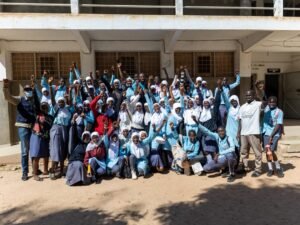
Day 3 of the O-Waste Sensitization and Training Program was conducted at Bakoteh Upper & Senior Secondary School, engaging a total of 57 students in our ongoing Waste Management and Composting training. As with previous days, all protocols and formalities were duly observed to ensure a smooth and impactful session.
2. Courtesy Call and Engagement with School Administration
Upon arrival, the coordinating teachers received us warmly and escorted us to the principal’s office. The principal welcomed us openly and initiated a thoughtful conversation about:
• The objectives of the O-Waste Project
• Its long-term impact on schools and communities
• The link between waste management and student well-being
Given the school’s proximity to the Bakoteh Fish Market and the Bakoteh Dumpsite, the discussion quickly turned technical. Waste management is a daily reality for both students and staff, affecting teaching, learning, air quality, and overall school safety.
3. Training Session
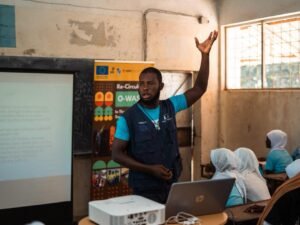
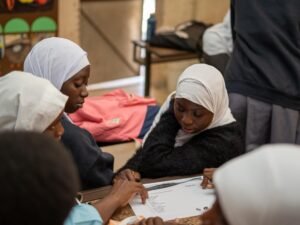
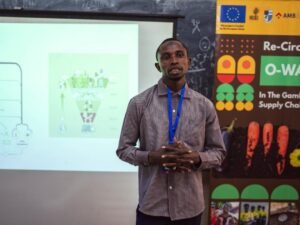
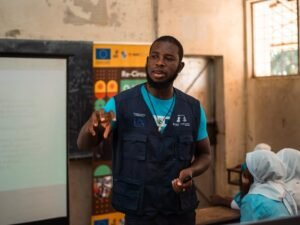
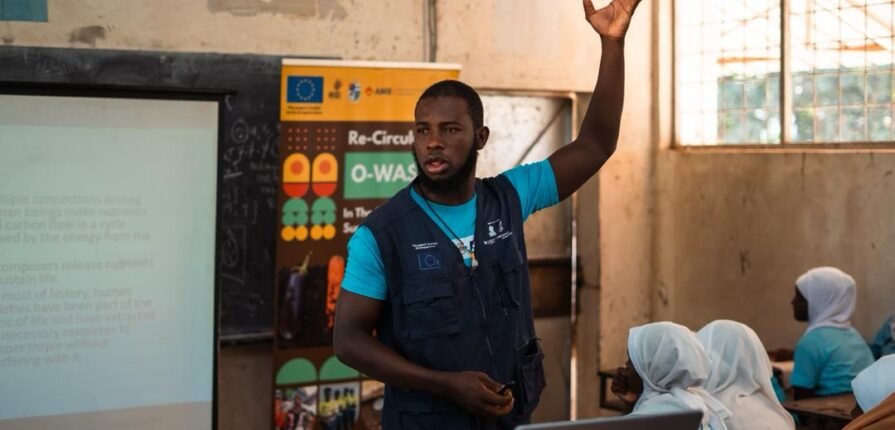
After the courtesy call, we proceeded to the classroom prepared for the session. Students from relevant clubs and classes were mobilised and seated for the training. The session was highly interactive, with students actively contributing to discussions and activities.
Many participants shared real-life experiences of:
• Smoke and pollution from the Bakoteh Dumpsite
• Fire outbreaks
• Strong, unpleasant odors
• Health issues affecting concentration and learning
These testimonies added emotional depth to the training and highlighted the urgent need for improved waste systems.
4. Key Topics Covered
Using the school-based training materials developed during the earlier teacher capacity-building workshop, we covered the following themes:
a. Understanding Waste
• Definitions and types of waste
• Waste as a resource vs. waste as a hazard
b. Waste Segregation and Sorting
c. Dangers of Open Burning
d. Impacts of Improper Waste Management
• On human health
• On the environment
• On the climate system
• On natural resource depletion
e. Importance of Proper Waste Management
• Protecting the environment from degradation
• Reducing exposure to toxins and disease
• Preserving natural resources via recycling and reuse
• Minimising greenhouse gas emissions, especially methane from dumpsites
• Saving money at household and institutional levels
5. Student Contributions
This session was particularly emotional and inspiring because the students experience the effects of poor waste management firsthand. Their recommendations—such as effective waste segregation at source and improving the school’s waste disposal systems—were practical and solution-oriented.
A memorable highlight came from the Head Girl, whose critical thinking stood out remarkably. She debated confidently, asked probing questions, and challenged ideas with rational, well-structured arguments. Her energy elevated the session and encouraged deeper engagement from her peers.
6. Conclusion
Day 3 of the O-Waste School Training Program was powerful, emotional, and transformative. The experience at Bakoteh Junior & Senior Secondary School reaffirmed why this project is crucial—not just for environmental sustainability, but for the health, dignity, and future of our young people.
The second leg of the training is scheduled for January 2026, where we will continue strengthening environmental awareness and building resilient waste management practices in KMC schools.
Teacher Coordinators: Mr Sonko and Mr Kanteh
Mbolo Association